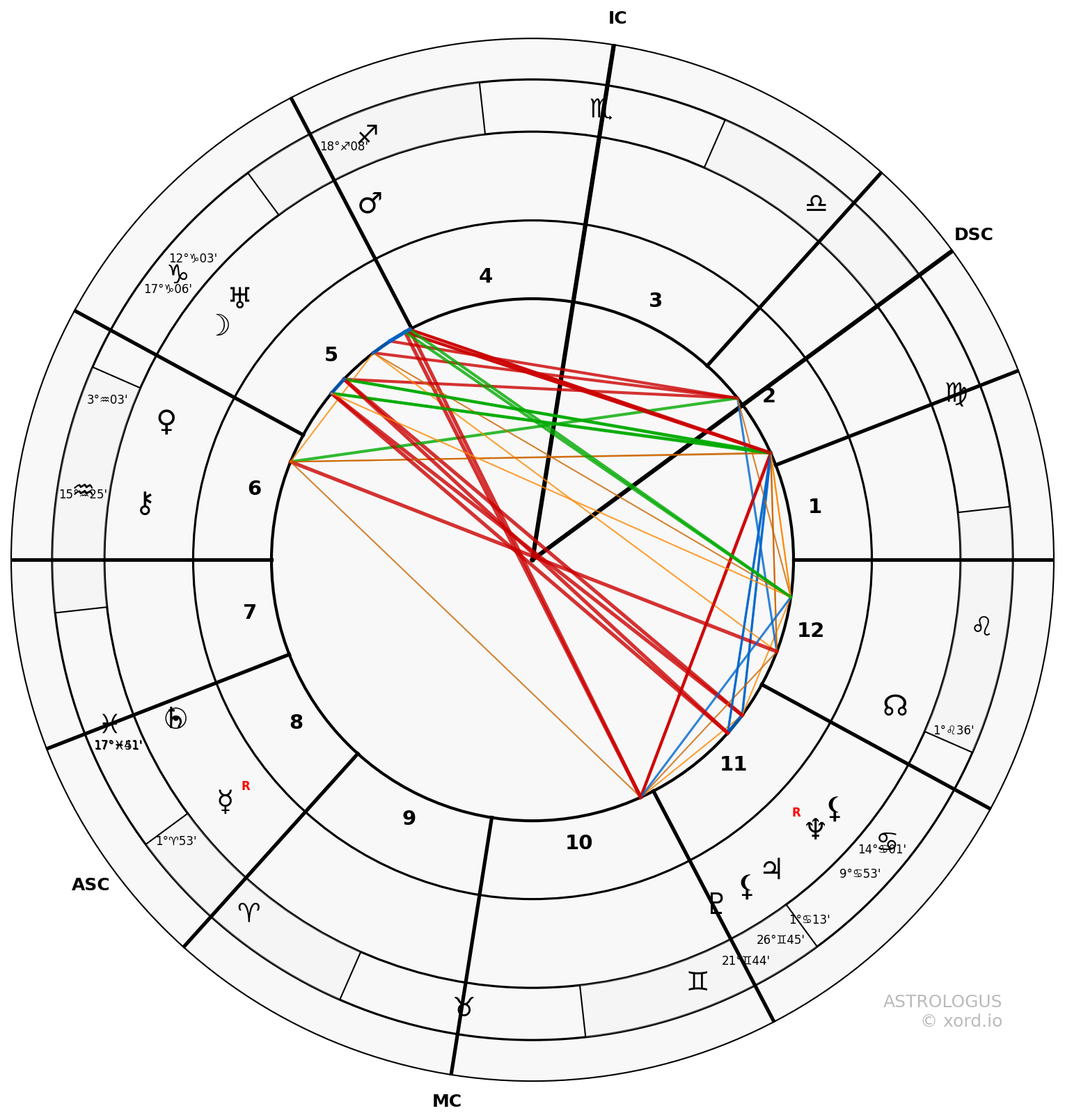
Sun Square Pluto (0.92°):
This is a tight, applying aspect, indicating a strong dynamic of intensity and transformative challenges between the individuals. Power struggles or deep psychological influences are likely, as Pluto seeks to transform the Sun's expression. This aspect can create a compelling attraction but may also lead to conflicts over control.
Moon Square Mars (4.37°):
A relatively loose, separating aspect, suggesting emotional volatility and potential conflicts. Emotional needs (Moon) may clash with actions and desires (Mars), leading to frustration or arguments. The square indicates tension but also the potential for dynamic interactions that can push both parties towards growth.
Mercury Conjunction Sun (3.36°):
This conjunction is moderately tight and typically harmonious. It signifies a strong intellectual connection, with Mercury enhancing the Sun's expression and clarity of communication. This aspect supports mutual understanding and shared interests in communication or intellectual pursuits.
Mercury Conjunction Jupiter (4.16°):
A broader conjunction indicating a positive and expansive exchange of ideas. Jupiter amplifies Mercury's communication, fostering an optimistic and philosophical outlook. This aspect suggests a harmonious intellectual connection with potential for growth and learning.
Mercury Square Uranus (1.97°):
A tight, applying aspect that introduces tension and unpredictability in communication. Mercury's logical processes are challenged by Uranus's innovative and erratic nature, leading to sudden changes or disruptions in thought patterns. This can stimulate creativity but may also cause misunderstandings.
Mercury Square Neptune (1.29°):
This tight, applying square brings confusion and potential for miscommunication. Neptune's influence can blur Mercury's clarity, leading to idealism or deception. It requires careful attention to ensure realistic and clear communication.
Venus Sextile Sun (2.2°):
A harmonious, moderately tight aspect promoting affection and mutual appreciation. Venus enhances the Sun's expression of love and creativity, fostering warmth and cooperation in the relationship.
Venus Sextile Mercury (1.63°):
This aspect is harmonious and fairly tight, indicating a pleasant and congenial communication style. Venus's influence softens Mercury, enhancing diplomacy and charm in interactions.
Venus Sextile Jupiter (3°):
A harmonious aspect, moderately wide, suggesting generosity and shared enjoyment. Venus and Jupiter together promote a sense of abundance and pleasure, enhancing the positive potential of the relationship.
Mars Sextile Saturn (0.5°):
A very tight, harmonious aspect that stabilizes and focuses drive and ambition. Mars's energy is directed constructively through Saturn's discipline, indicating a productive partnership that can achieve practical goals.
Mars Opposition Pluto (0.64°):
This is a tight, tense aspect suggesting intense power dynamics and potential conflict. Mars's assertiveness clashes with Pluto's transformative force, which can lead to confrontations and a need for control or dominance.
Jupiter Square Sun (4.02°):
A slightly loose, separating aspect, indicating challenges in balancing optimism and self-expression. Jupiter's expansive nature can lead to overconfidence or exaggeration in the Sun's expression, requiring moderation.
Jupiter Square Mercury (3.46°):
This aspect suggests a broad, separating tension in communication. Jupiter's influence may lead to overextension in ideas or communication, requiring attention to detail and practicality.
Jupiter Opposition Uranus (1.3°):
A tight, tense aspect highlighting unpredictability and sudden changes in beliefs or philosophies. Jupiter's expansion contrasts with Uranus's revolutionary tendencies, leading to innovative but potentially disruptive interactions.
Jupiter Conjunction Neptune (1.95°):
A tight, harmonious aspect indicating a shared visionary or spiritual connection. Jupiter's expansiveness combines with Neptune's idealism, fostering mutual inspiration and compassion.
Saturn Square Pluto (1.09°):
A tight, tense aspect that can lead to power struggles and challenges in authority or control. Saturn's structure is at odds with Pluto's transformative energy, creating a dynamic of deep, potentially difficult change.
Uranus Sextile Venus (3.89°):
A moderately loose, harmonious aspect promoting originality and excitement in love and aesthetic appreciation. Uranus adds a sense of novelty and unpredictability, enhancing Venus's charm.
Neptune Trine Venus (1.72°):
A tight, harmonious aspect fostering a romantic and idealistic connection. Neptune enhances Venus's creativity and compassion, supporting a loving and artistic bond.
Neptune Square Jupiter (3.84°):
A moderately loose, tense aspect indicating potential over-idealism or confusion in shared beliefs. Neptune's influence can lead to unrealistic expectations or escapism.
Pluto Sextile Mars (0.26°):
A very tight, harmonious aspect that empowers and intensifies drive and ambition. Pluto supports Mars's energy, promoting transformation and constructive action.
Pluto Trine Saturn (4.1°):
A slightly loose, harmonious aspect indicating a supportive dynamic for deep, lasting transformation. Pluto's transformative power works well with Saturn's discipline, fostering resilience and long-term growth.
Summary: Sun Square Pluto (0.92°): This is a tight, applying aspect, indicating a strong dynamic of intensity and transformative challenges between the individuals. Power struggles or deep psychological influences are likely, as Pluto seeks to transform the Sun's expression. This aspect can create a compelling attraction but may also lead to conflicts over control.
Sun Square Pluto:
In the mythic play of their intertwined lives, the Sun Square Pluto (0.92°) forms the core tension. Here, the radiant chariot of Apollo meets the shadowed underworld of Hades. This aspect suggests a powerful dynamic where the light of individual identity must grapple with the hidden depths of transformation and power struggles. Each soul may challenge the other to confront deep-seated fears and desires, illuminating the path to profound change or conflict.
Moon Square Mars:
The Moon Square Mars (4.37°) introduces a tale of emotional tempest and warrior's fire. The Moon, guardian of inner realms and instinct, clashes with the assertive and fiery Mars, suggesting potential for emotional volatility and passionate exchanges. The challenge lies in balancing nurturing instincts with the drive for action, as the tides of feeling meet the forge of will.
Mercury Conjunctions:
Mercury Conjunction Sun (3.36°) and Mercury Conjunction Jupiter (4.16°) speak of a harmonious confluence where Hermes, the messenger, dances with Apollo and Zeus. This signifies intellectual alignment and expansive dialogue, a shared quest for knowledge and truth. Communication is a golden thread, weaving wisdom and clarity into the relationship.
Mercury Squares:
Yet, Mercury Square Uranus (1.97°) and Mercury Square Neptune (1.29°) introduce the trickster's challenge. The unpredictable spark of Uranus and the nebulous dreamscape of Neptune suggest moments of sudden insight and creative inspiration, alongside potential confusion and miscommunication. The relationship must navigate these currents, embracing innovation while grounding dreams in reality.
Venus Sextiles:
Venus Sextile Sun (2.2°), Venus Sextile Mercury (1.63°), and Venus Sextile Jupiter (3°) offer blessings from Aphrodite. These harmonious aspects infuse the connection with love, charm, and abundance, supporting a partnership enriched with beauty and joy. This celestial garden nurtures growth, encouraging both to savor life's pleasures together.
Mars/Saturn/Pluto Alliance:
Mars Sextile Saturn (0.5°) and Pluto Sextile Mars (0.26°) provide an alchemical foundation. Mars, the warrior, aligns with Saturn's discipline and Pluto's transformative power, suggesting a capacity for strategic action and deep-seated strength. This pair can conquer obstacles together, wielding determination and transformative energy.
Jupiter Dynamics:
Jupiter's Square with the Sun (4.02°) and Mercury (3.46°), along with Opposition to Uranus (1.3°), introduces a dynamic of growth through challenge. The expansive force of Jupiter pushes against the boundaries, urging both to expand their horizons and embrace the unexpected. Yet, the journey demands balance, as the urge for freedom meets the need for stability.
Neptune Trine Venus:
Neptune Trine Venus (1.72°) casts a spell of enchantment, weaving dreams and romance into the fabric of their connection. This aspect suggests a deep, spiritual bond, where love transcends the mundane, inviting both to explore the realms of imagination and intuition.
Saturn Square Pluto:
Saturn Square Pluto (1.09°) underscores the relationship with a profound lesson in endurance and transformation. This aspect speaks of karmic challenges, where the structures of life may be tested, demanding resilience and growth through adversity.
Uranus Sextile Venus:
Uranus Sextile Venus (3.89°) offers refreshing winds of change, encouraging innovation and excitement in matters of the heart. This aspect fosters a relationship that thrives on novelty and the freedom to explore uncharted territories together.
Pluto Trine Saturn:
Finally, Pluto Trine Saturn (4.1°) reveals a profound strength in the union, a capacity for lasting transformation and mutual empowerment. This aspect suggests that through shared challenges, each becomes a catalyst for the other's growth, forging an enduring bond.
Summary: As the tapestry of their connection unfolds, may they embrace the transformative power of their union, forged in the crucible of challenge and enriched by the gifts of love and wisdom. Let the mythic image of the Phoenix rising from the ashes symbolize their journey, ever-renewing and ever-reaching for the stars.
Venus Sextile Sun (2.2°):
This harmonious aspect indicates a mutual appreciation of beauty and values. Venus, with her phlegmatic temperament, brings a gentle, loving energy to the dynamic, while the Sun in its diurnal nature seeks expression and recognition. Together, they foster a relationship built on admiration and the enjoyment of shared pleasures. This aspect encourages warmth and affection, enhancing the social and romantic connection between the individuals.
Venus Sextile Mercury (1.63°):
Here, the connection between Venus and Mercury promotes a harmonious exchange of ideas and thoughts related to love and beauty. Mercury's adaptable nature, combined with Venus's desire for harmony, suggests effective communication in the relationship. This aspect indicates that both individuals can articulate their feelings and desires with grace, supporting a relationship that values intellectual connection alongside emotional bonds.
Venus Sextile Jupiter (3°):
This aspect brings together two benefic planets, Venus and Jupiter, amplifying joy and optimism in the relationship. Jupiter's sanguine disposition, combined with Venus's phlegmatic nature, creates an atmosphere of generosity and mutual support. This aspect suggests a partnership characterized by shared values and a desire to grow and expand together, enriching both individuals' lives with a sense of abundance and shared happiness.
Mars Sextile Saturn (0.5°):
The interaction between Mars and Saturn in this sextile aspect offers a balance between initiative and discipline. Mars, with its choleric temperament, provides energy and drive, while Saturn, with its melancholic nature, imparts structure and long-term vision. This aspect suggests a relationship where both individuals can work together effectively, combining their strengths to achieve common goals with determination and perseverance.
Mercury Conjunction Sun (3.36°):
This conjunction indicates a merging of intellect and identity. Mercury's adaptable energy aligns with the Sun's quest for expression, suggesting that communication and shared ideas are central to the relationship. This aspect fosters mutual understanding, where both individuals feel seen and heard, supporting a dynamic where intellectual connection and personal expression thrive.
Mercury Conjunction Jupiter (4.16°):
The conjunction of Mercury and Jupiter enhances intellectual expansion and optimistic thinking. Jupiter's sanguine nature encourages broad-mindedness and philosophical discussions, while Mercury facilitates the exchange of ideas. Together, they promote a relationship that values learning, exploration, and a shared enthusiasm for knowledge, fostering growth and a sense of adventure.
Moon Square Mars (4.37°):
This challenging aspect points to potential emotional volatility and tension. The Moon, ruling the nocturnal sect, represents emotions and instincts, while Mars brings assertive choleric energy. The square aspect indicates friction, where emotional needs may clash with actions or desires. This dynamic requires conscious effort to balance emotional reactions with assertive behavior.
Jupiter Square Sun (4.02°):
The square between Jupiter and the Sun suggests a dynamic tension between optimism and ego expression. Jupiter's expansive nature may challenge the Sun's desire for recognition, creating a need to balance personal ambition with broader perspectives. This aspect encourages both individuals to find harmony between personal growth and shared aspirations.
Jupiter Square Mercury (3.46°):
This aspect highlights potential conflicts between expansive thinking and detailed communication. Jupiter's enthusiasm may sometimes overwhelm Mercury's need for precision, leading to misunderstandings or exaggerated claims. To navigate this square, both individuals must strive for clarity and balance in their exchange of ideas.
✨ Extended Symbolic Reading ✨
Moon Square Mars:
In the celestial dance of these two individuals, we begin with the Moon Square Mars. This aspect creates a dynamic tension between emotional sensitivity and assertive drive. The Moon, with its nocturnal and nurturing essence, clashes with Mars' choleric and fiery nature. This can lead to passionate interactions, where emotional responses may be met with vigorous, sometimes confrontational energy. The challenge lies in finding a harmonious balance between emotional needs and assertive actions.
Mercury Conjunction Sun:
Next, we examine Mercury Conjunction Sun. Here, Mercury, the adaptable communicator, merges with the radiant essence of the Sun. This conjunction fosters a strong intellectual connection, where communication flows with clarity and purpose. The Sun, in its diurnal nature, illuminates Mercury's mental agility, creating a synergy that enhances understanding and mutual expression.
Mercury Conjunction Jupiter:
Mercury Conjunction Jupiter follows, with Jupiter's sanguine and expansive influence augmenting Mercury's communicative prowess. The conjunction signifies a union of intellect and wisdom, stimulating conversations that are both meaningful and broad in scope. Jupiter, being benefic, brings optimism and an expansive outlook to Mercury's more detailed focus, creating a shared vision.
Venus Sextile Sun:
Venus Sextile Sun offers a harmonious connection between the phlegmatic charm of Venus and the Sun's vibrant energy. This sextile aspect cultivates an affectionate and creative dynamic, where love and admiration flow freely. The Sun's illumination of Venusian values enhances the appreciation of beauty and harmony within the relationship.
Venus Sextile Mercury:
Venus Sextile Mercury emphasizes a delightful exchange of ideas and feelings, where Venus' grace enhances Mercury's communicative skills. This aspect encourages a pleasant and diplomatic interaction, with an emphasis on gentle persuasion and mutual enjoyment of intellectual pursuits.
Venus Sextile Jupiter:
Venus Sextile Jupiter further enriches the relationship with its benefic and harmonious nature. Here, Venus' allure and Jupiter's generosity combine to create a joyful and loving bond. This aspect fosters a sense of abundance and ease in the relationship, promoting mutual growth and shared happiness.
Mars Sextile Saturn:
Mars Sextile Saturn reveals a supportive dynamic between Mars' assertive drive and Saturn's structured discipline. This aspect channels Mars' energy into productive endeavors, where Saturn's melancholic stability provides a strong foundation. Together, they form a resilient partnership capable of achieving goals through determination and strategic effort.
Jupiter Square Sun:
Jupiter Square Sun introduces a challenging interplay between expansion and identity. The Sun's core self-expression may feel stretched by Jupiter's expansive aspirations, leading to potential conflicts over growth and individual desires. The square aspect demands a balance between personal goals and shared ideals, urging both parties to find common ground.
Jupiter Square Mercury:
Lastly, Jupiter Square Mercury presents a tension between detailed analysis and broader perspectives. Mercury's focus on specifics may clash with Jupiter's desire for wide-ranging exploration. This aspect encourages the individuals to bridge the gap between detailed and expansive thinking, fostering a more integrated approach to communication and understanding.
Summary: In sum, the interplay of these celestial forces weaves a complex tapestry of connection, challenging the individuals to harmonize their differences while celebrating their shared strengths.